12min read
Content
,
Studio Guide
Choosing a podcast studio looks like a simple comparison. Two or three rooms, an hourly rate each, pick the one that fits the budget. In practice it is one of the more consequential decisions a business makes about its show, because a studio is not really a room. It is a production partner, and the gap between a good one and a poor one is the gap between a show a business is proud to publish and one it quietly lets fade after a season.
This guide is written for businesses comparing studios in Melbourne and Sydney, and it is deliberately practical. It covers what actually separates studios from one another, the details that are easy to miss, and the specific questions worth asking before any money changes hands. The rates matter, but they are the last thing to compare, not the first.
START WITH THE OUTCOME, NOT THE ROOM
Before looking at a single studio, a business should be able to describe what it wants to walk away with. A finished, publish ready episode delivered next week is a very different requirement from raw files to hand to an in house editor. A show built to be watched on YouTube and clipped for LinkedIn needs different things from an audio only interview series. The clearer a business is about the outcome, the easier every other comparison becomes, because a studio can only be judged against what you actually need it to do.
The most common and expensive mistake is comparing studios on price before defining the outcome, then discovering too late that the cheapest room did not include the very things that would have made the show work.
VIDEO CAPABILITY IS THE REAL DIVIDING LINE
In 2026, the single biggest difference between studios is whether they are genuinely built for video, and how well. This matters even for businesses that think they only want audio, because most shows end up wanting video within a season, and a studio that cannot deliver it forces a change of partner at exactly the wrong moment.
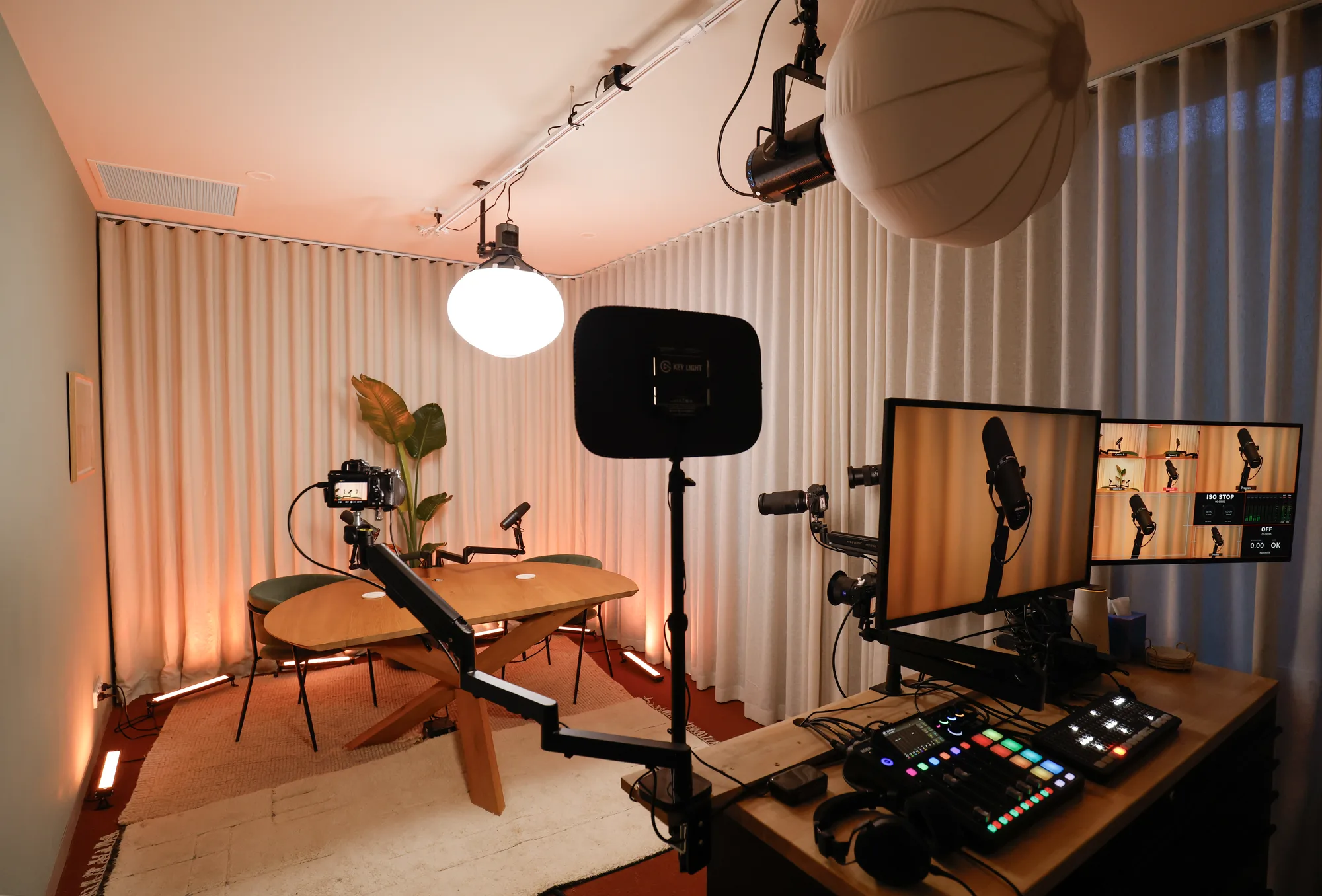
Genuine video capability is not one camera in the corner. It is multiple cameras positioned to cover a conversation from more than one angle, the ability to switch between them so the finished edit feels directed, and deliberate lighting that makes people look their best rather than merely visible. At the higher end, it means cinema grade cameras and the resolution to match. Our Collins Street studio, for example, runs four Blackmagic 6K cameras, and is the only studio in Melbourne shooting at that resolution, which matters for brands who want their flagship content to hold up anywhere it appears.
When comparing studios, look past the phrase "video capable" and ask exactly what that means in equipment and in people. A room that can technically record video is not the same as a room built to produce it well.
AUDIO QUALITY IS STILL THE FOUNDATION
It is easy to be drawn to the visible things and forget that a podcast lives or dies on sound. Poor audio is the fastest way to lose a listener, and no amount of good picture rescues it. A studio worth booking uses broadcast standard microphones, has a room treated so voices sound clear rather than boxy or echoing, and runs the audio through an engineer or a proper processing chain so it is clean before anyone hears it.
Ask what microphones a studio uses, whether the space is acoustically treated, and whether someone is responsible for the sound during the session or it is simply captured and handed over. The answer tells you whether audio is treated as a craft or an afterthought.
WHO IS ACTUALLY IN THE ROOM
This is the detail that separates a studio hire from a production partnership, and it is frequently the one businesses discover only after booking. In some studios you are hiring an empty room and are expected to run the session yourself. In others, a producer or director is in the room with you, guiding the conversation, watching for moments, managing the technical side, and keeping guests relaxed enough to be good on camera.
For a business without its own production experience, that person is often the difference between a usable recording and a wasted afternoon. It is worth asking directly. Is there a producer in the session, and what do they actually do during it. In our studios, a producer runs every session and switches the cameras live, which means the business can focus entirely on the conversation rather than the equipment.
WHAT IS INCLUDED, AND WHAT IS QUIETLY AN ADD ON
The most misleading thing about studio pricing is that two quotes at similar rates can represent completely different scopes. One might include a finished, edited multicam file. Another might include only the raw recording, with editing, video, and delivery all billed separately. The headline rate hides the difference, and businesses often find it only when the invoice arrives or the deliverable falls short.
Before comparing rates, get every studio to spell out what a session includes. Is the recording delivered finished or raw. Is video part of the rate or an add on. How many rounds of editing revisions are covered. Is the multicam cut included, or extra. Our own studio hire includes a director's multicam cut as standard, a finished, live switched recording rather than raw files to sort out later, and knowing whether a studio does the same makes an enormous difference to what its rate actually buys.
Our guide to podcast production costs in Australia covers this scope question in detail, and it is the single biggest reason two similar looking quotes can be worlds apart.
DELIVERY MATTERS MORE THAN BUSINESSES EXPECT
How and when a studio delivers the finished work is easy to overlook and genuinely important to how the show runs. A slow, disorganised delivery process turns every episode into an administrative chore. Ask how long delivery takes, in what format, and through what system.
The better studios have moved past emailing links and sending drive folders that expire. Deliverables should arrive somewhere organised, labelled, and easy to approve or download without an account or a technical hurdle. We deliver through Frame.io, with a target of five to seven business days for full service work, so a business always knows where its content is and when it is coming. When comparing studios, a clear, professional delivery process is a strong signal that the rest of the operation is run the same way.
REMOTE GUESTS AND FLEXIBILITY
Few businesses run a show where every guest can always be in the room. A studio that can bring in a remote guest at broadcast quality, rather than a grainy video call, widens who a show can feature enormously. If interviews with people in other cities or countries are likely, ask how the studio handles remote guests and at what quality. We use Riverside.fm to record remote guests at full quality alongside the in room feed, which keeps a distributed conversation looking and sounding like one production rather than a patchwork.
LOCATION, ACCESS, AND THE PRACTICAL DETAILS
The unglamorous logistics decide whether a show is easy to keep making. For a business booking regularly, an inconvenient studio quietly erodes commitment. Consider where a studio sits relative to the team and to likely guests, how easy it is to reach, and whether parking or public transport works for the people you will be bringing. A CBD location like our Collins Street studio suits brands and enterprise clients who want their guests arriving somewhere central and impressive. An inner city studio like our Collingwood room suits shows that value character and calm over a corporate address. Neither is better, but the fit matters, because guests form an impression of a brand from the moment they walk in.
HOW THE SET LOOKS, AND WHETHER IT FITS THE BRAND
A studio's set becomes the backdrop to a business's public content, so it needs to suit the brand rather than fight it. Some rooms are bright and clean, others dark and cinematic. Look at the actual footage a studio has produced, not just photos of the empty room, and ask whether it looks like a setting the brand would want to be seen in. This is where a free studio tour earns its keep, because a room feels very different in person from how it photographs.
THE QUESTIONS WORTH ASKING EVERY STUDIO
Put the same questions to every studio you compare, because that is the only way to see past the surface. How many cameras, and are they switched live. What microphones, and is the room treated. Is there a producer in the session, and what do they do. Is the recording delivered finished or raw. Is video included or an add on. How many editing revisions are covered. How and how quickly is the work delivered. Can you record remote guests at quality. And what, exactly, is not included. Two quotes that look similar will separate quickly once these are answered.
RED FLAGS TO WATCH FOR
A few signals reliably indicate a studio that will disappoint. Vagueness about what a rate includes. No producer in the session for a business that clearly needs one. Only one camera described as video. Delivery measured in weeks with no clear process. No examples of finished work, only photos of the room. And an unwillingness to let you visit before booking. None of these are automatically disqualifying on their own, but more than one together usually points to a room for hire rather than a production partner.
VISIT BEFORE YOU COMMIT
The most useful thing a business can do before choosing is stand in the room. A studio tour tells you in fifteen minutes what a website cannot, how the space feels, how the team works, and whether this is somewhere the brand belongs. Most businesses make the decision the moment they walk in.
If you are comparing studios for your show, book a free studio tour with us and see how one is meant to feel. Bring your questions, and we will answer them honestly, including the ones about what is not included.
— On The Record
"A great studio doesn't just hand you a room. It makes you better than you walked in. Find the team that treats your show like it's their own, and everything else gets easier."
· Continue reading
More from the desk



New articles, fortnightly.
Production insights and studio craft, direct to your inbox. Straight from the studio.